Ground-Level View of VC-VAc Copolymer Resin
Long years on the production floor provide a different lens on Solbin and its vinyl chloride-vinyl acetate copolymer chemistry. Making this resin isn’t just a technical exercise; it comes with the kind of daily challenges you can only appreciate in a hands-on manufacturing environment. From the feedstock stage, you need to watch raw material purity—a single batch drifting outside spec can ripple straight through to final application, affecting clarity, stability, and downstream processing. The manufacturing process always matters. Control in polymerization, stabilization against thermal degradation, and careful avoidance of catalyst residues set the stage for higher-grade products that our clients in coatings, adhesives, and textile pastes have counted on for years.
Early on, vinyl chloride-based copolymers saw wide use in markets demanding tough, water-resistant, and chemical-stable resins. Adding vinyl acetate really brings a game-changing flexibility. The interplay between these two components doesn’t just affect technical characteristics on paper. On the shop floor, a balanced copolymer gives you film-forming properties with better adhesion and plasticity. When clients ask for resins that survive outdoor exposure without getting brittle, or remain clear and flexible after years, that's the direct result of the copolymer backbone we've pushed to optimize batch after batch.
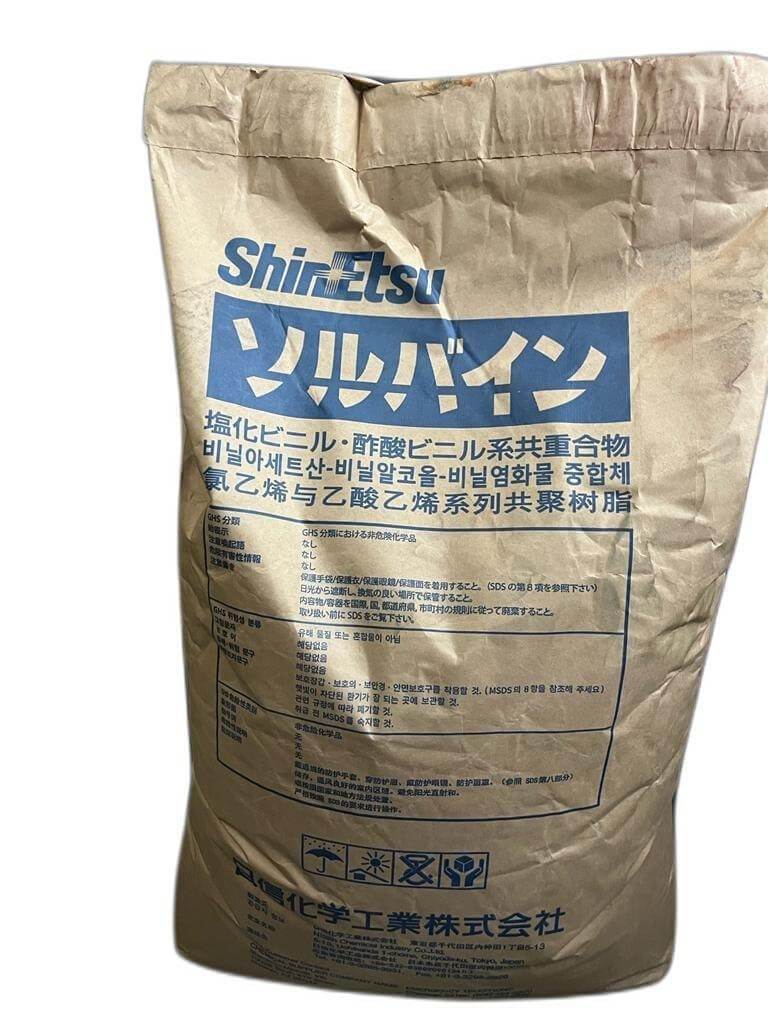
Real-World Properties: From Lab Data to Production Lines
Everyone who runs an extruder, mixer, or reactor knows that processing stability can make or break a line. Solbin consistently offers good thermal stability and pellet flow—a crucial requirement when the calendar is full and downtime costs compound in lost labor and scheduling headaches. Softening point, fusion temperature, and particle size affect feed reliability and processing, not just theoretical specs. For molded goods, that translates to consistent shrinkage and demolding. For specialty coatings, the clarity and gloss show up straight on the end product, not just as a line on a data sheet.
Daily work with Solbin has reaffirmed that the copolymer’s resistance to water, dilute acids, and alkalis gives users confidence in applications like wallcoverings, synthetic leathers, and tarpaulins. The resin shrugs off routine cleaning cycles and weather-related attacks. Customers using it in flexible film avoid the cracking that drags down shelf life. For adhesives, the resin’s balance delivers peel strength that holds under humidity swings; not a coincidence, but the fruit of decades of raw material selection, reactor upgrades, and testing during scale-up.
Challenges: Manufacturing and User Perspective
No process is free of hurdles. One of the bigger constraints has always been the volatility of raw monomer prices and availability. Vinyl chloride’s price swings and regulatory limitations dictate procurement cycles, so supply chain management grows as important as reactor control. In some regions, compliance with local environmental and health standards takes serious investment in emission controls, which our company factored into CAPEX cycles from early on. Direct dialogue with regulatory agencies has kept our plant from costly product holds or redesigns.
Clients sometimes push the resin into new applications—3D printing binders, composite matrixes, or novel textile finishes—each bringing a learning curve in both formulation and pilot-scale testing. In-house tweaking of plasticizer content or stabilizer systems, and sharing those findings with technical partners, helps everyone manage expectations and avoid expensive surprises on the customer's end.
Responsible Manufacturing: From E-E-A-T to Real Practice
As a chemical manufacturer, safety, transparency, and process traceability become non-negotiables. That means every drum and sack carries batch records that go well beyond regulatory minimums. Customers expect full disclosure on resin provenance and supporting documentation for VOCs, REACH, and RoHS status. The days of “good enough for most uses” are gone; performance claims rest on test data run in accredited labs, not anecdotal notes from the R&D bench. We keep our lines open for audits, respond to product stewardship questions, and participate in industry roundtables to compare notes on future legislative shifts.
Producing VC-VAc copolymer at scale leaves no room for cutting corners. Steady attention to emissions, solvent recovery, and closed-system ingredient handling set the floor for safe operation—reducing exposures for workers and communities living near the plant. Our newer lines incorporate scrubbers and waste-heat reuse that not only shrink carbon footprint, but have dropped our per-ton overhead in the process.
Future Points and Industry Shifts
Decarbonization and demand for renewably sourced chemicals drive ongoing upgrades to our plant design and supply agreements. Technical partners push for bio-based plasticizers and new process aids, and each proposed change gets a full vetting for line compatibility and regulatory side effects. At the same time, end-users leverage the copolymer’s flexibility to enter growing sectors: UV-curable dispersions, medical tubing, packaging where clarity and softness replace brittle PVC in applications once thought off limits for polyvinyl chloride. All these new opportunities trace back to continuous investments in process control and an honest appraisal of both the strengths and weak points of the chemistry we offer.
From a manufacturer’s view, Solbin’s VC-VAc copolymer stands as the result of persistent hands-on development, not just smart molecular design. Each batch tells its own story, shaped as much by the day’s weather and raw input lots as it is by reactor setpoints. Speaking candidly, the resin’s ongoing role in modern industry depends on how honestly we handle safety, data, and transparent buyer communication. On the production floor, every improvement—no matter how small—helps deliver resin with reliable performance, setting the standard beneath every finished product our clients produce.
Website: www.china-pva.net
Whatsapp: 0086-15380400285
E-mail: sales2@china-pva.net