1. What is PVB laminated glass?
Laminated glass is a type of safety glass made by sandwiching a thin interlayer film between two layers of glass in a high-temperature, high-pressure autoclave. PVB (polyvinyl butyral) is the primary interlayer material in laminated glass. Other interlayer materials, such as EVA (ethylene-vinyl acetate copolymer), are also used. PVB interlayers offer unique advantages, such as strong adhesion to glass, puncture resistance, and impact resistance.
Due to its shatterproof properties, PVB laminated glass is widely used in applications with high safety requirements, such as automotive windshields, side windows, and architectural glass. In the automotive industry, almost all countries (such as the United States, Europe, and Japan) mandate the use of laminated glass for windshields. As the demand for bright, open spaces increases, the role of glass in comfort, design, and safety becomes increasingly important. PVB laminated glass, as a technology that can enhance the application potential of glass, is receiving increasing attention.
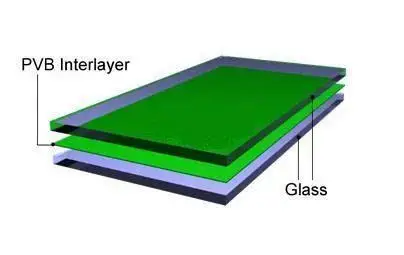
2. What is a PVB interlayer?
PVB is the most commonly used interlayer material in laminated glass. Its high optical transparency, flexibility, ease of adhesion to various surfaces, and low cost make it a primary interlayer material for glass manufacturers.
Our high-quality PVB interlayers are widely used globally and offer the following advantages:
• High transparency – ensures clear and bright glass.
• Safety – shatterproof, absorbs impact, and prevents accidents.
• Protection – withstands impacts from hammers or glass cutters.
• UV blocking – blocks 99% of UV rays.
• Design – allows for gradient or color effects with varying film thicknesses.
• Solar energy control – reduces heat in cars or buildings.
• Sound insulation – blocks external noise, creating a quiet environment.
• Head-up display – compatible with HUD systems, providing clear images.
Website: www.china-pva.net
Whatsapp: 0086-15380400285
E-mail: sales2@china-pva.net